
A demonstration of exposed network traffic
The Wall of Sheep idea is a memorable way to explain a security problem: information sent without suitable encryption can be visible to someone monitoring the network path. In this July 2017 experiment, I explored that idea using a WiFi Pineapple and its DWall module.
If the hardware is new to you, start with my introduction to the WiFi Pineapple. The original test used the older TETRA-era interface, so its controls should not be assumed to match current models.
What the original lab involved
The experiment combined a wireless access point with a module that displayed information observed in unencrypted HTTP traffic. In an authorized lab, your own test device and a deliberately unencrypted test page are enough to demonstrate the principle without collecting anyone else’s private activity.
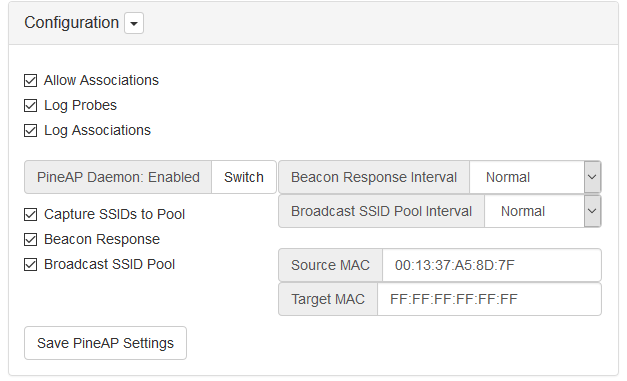
The original article described an access point imitating network names. That does not mean every nearby device will automatically connect. Authentication, saved network settings, and device behavior all affect the outcome.
What the display could show
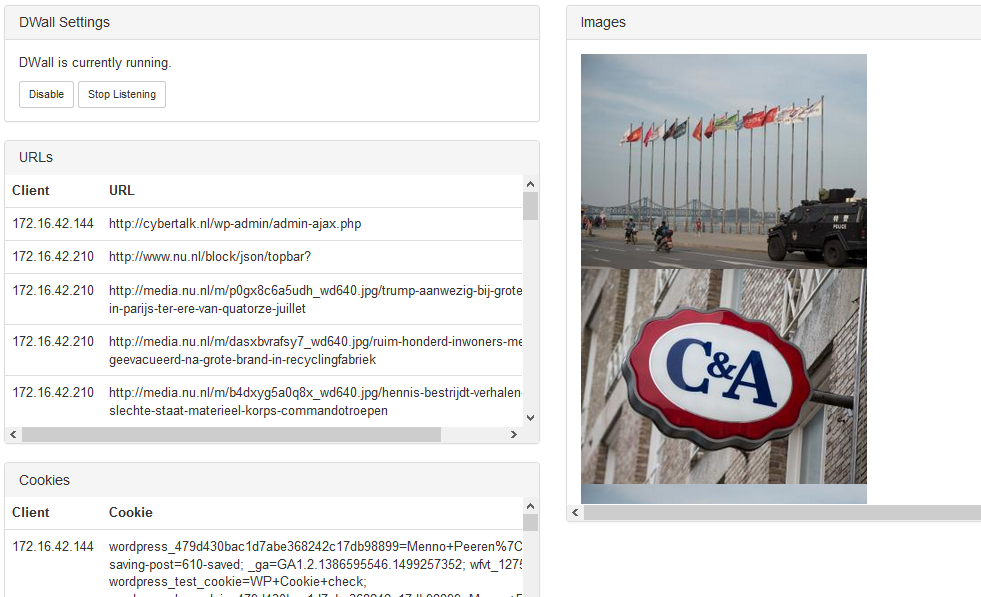
For unencrypted HTTP traffic passing through the test setup, the display could include requested pages, images, and submitted data. The screenshot below preserves an example from the original demonstration.
What HTTPS changes
HTTPS encrypts application traffic between the browser and the authenticated server. Merely running a wireless access point does not make that content readable. The original article’s broad suggestion that every image and request would be visible should be understood as applying to suitable unencrypted traffic, not all browsing.
The lesson is to pay attention to the connection and its protections. A familiar network name alone isn’t proof of trust, and a network monitor’s ability to see metadata is different from being able to read encrypted page contents.




Beste Menno,
In het bovenstaand stuk lees ik het volgende: “Het is bekend dat sites die zich beveiligen met een SSL certificaat hier minder tot geen last van hebben. Hier is een methode om ook deze date te kapen, alleen bewaar ik dat voor een volgende keer.”
Mijn vraag luidt dan ook: “Is er een update van dit document waarin ook SSL verkeer kan worden ingelezen.
Ik ben een cybersecurity docent, in opleiding, en wil graag de Pineapple in de klas gebruiken als demo materiaal en aantonen hoe gevaarlijk openbare netwerken zijn. Mijn studenten moeten leren hoe ze deze kunnen beveiligen maar ook anderen kunnen adviseren hoe met dit soort netwerken om te gaan.
vriendelijke groet,
Peter Rong
ROC Nova College Beverwijk