Two tiny routers with a mining feature
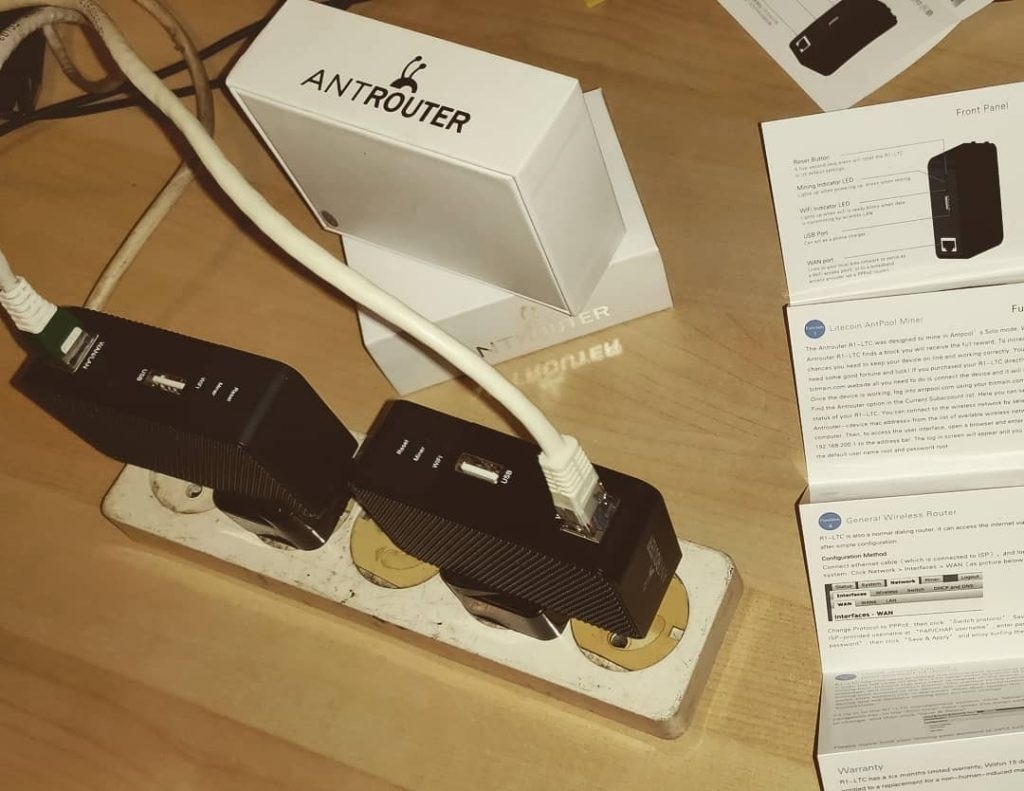
In 2018, I ordered two small Antrouter devices from Bitmain for roughly €100 paid in bitcoin. They arrived in about ten days, and after paying import charges I was ready to try them.
The adapter didn’t fit my wall outlet
The optional European adapter converted the plug shape, but its flat body didn’t fit my recessed Dutch wall outlet. A suitable power strip let me test the units. If you encounter a similar problem, use a correctly rated adapter appropriate for the device and local outlet rather than forcing it into place.
Wireless access-point use
The units also offered 2.4 GHz wireless networking. My original notes described 802.11 b/g/n and an advertised 300 Mbps link rate, not a measured internet throughput of that speed. These units did not provide the 5 GHz feature I discussed.
Choose channels and power settings allowed for the device’s country configuration. The Netherlands-specific transmit limit quoted in the original shouldn’t be applied as a universal rule in the United States.
Setting up the miner
I connected the devices to power and Ethernet, found their management addresses, and configured mining through the web interface. The original instructions mentioned default credentials; on reused hardware, change defaults and keep the interface off the public internet.
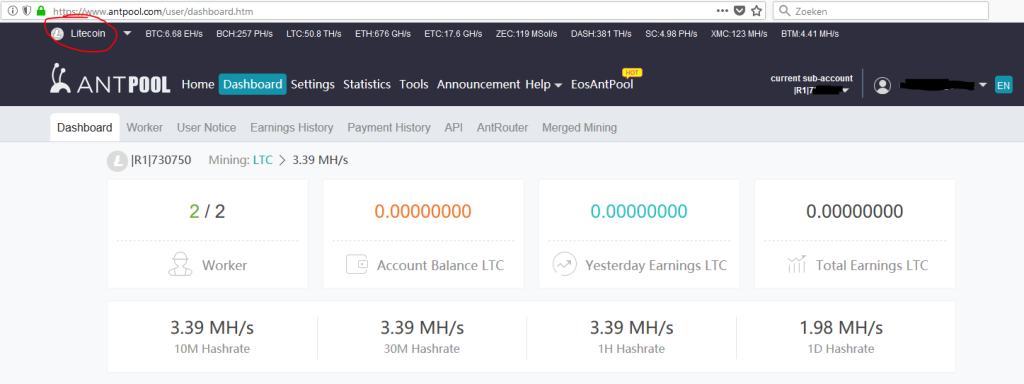
My notes switched between Bitcoin and Litecoin terminology and referred to Antpool settings. Different Antrouter variants and mining algorithms aren’t interchangeable. Verify the exact model, supported algorithm, and pool instructions before reusing those settings.
What I observed
The recorded figures included roughly 1.71 MH/s during testing and about 3.39 MH/s with both units operating. The article wasn’t consistent about whether every measurement referred to one unit or the pair, so they shouldn’t be treated as a precise benchmark.
A continuous 4-watt load would use about 35.04 kWh per year. The €7.71 annual estimate used the electricity price assumed then; your bill will differ.
The solo-mining claim needed correction
The original compared solo mining with a lottery ticket, but mixed algorithms, rewards, and dates. Its 25 BTC payout example was not a valid general reward statement for September 2018, and a Litecoin-style hashrate can’t be compared directly with Bitcoin hashrate.
This was a small hardware experiment, not evidence of profitable mining or a realistic expectation of winning a block. Use the model’s actual capabilities and current network conditions for any calculation.
Images from the original article